
What is the customer journey?
The customer journey describes a customer’s entire path from first noticing an offer through comparison and purchase decision to use and recommendation. It covers all touchpoints with a company, online and offline.
Customer journey: definition and importance
Customers rarely decide on impulse. They notice a problem, look for information, compare providers, request quotes and finally buy—or drop out along the way. The customer journey maps this path, from the customer’s point of view rather than that of the company’s departments. It shows when which piece of information is needed.
A phase model is common: awareness, consideration, decision and then use and retention. Depending on the industry, referral or repeat purchase are added. Each phase has its own questions, expectations and channels, and each can be supported in a targeted way: with guide content at the start, references and comparisons in the middle and a fast, clear quote at the end.
Touchpoints and the customer journey map
A touchpoint is any contact between customer and company: the Google search, the website, a review, a phone call, the quote, the invoice, the service technician. A customer journey map lays out these touchpoints along the phases and adds what the customer thinks, needs and feels at each point.
It is built from real data: conversations with customers, questions received by sales, reports from Google Analytics 4 and the CRM. It is important to base it on a specific type of customer (persona). A single map for all target groups usually stays too general to derive measures from.
Real-world example: a heat pump for a single-family home
A homeowner searches for “heat pump subsidy,” reads guide articles, compares installers in the region, checks reviews and finally requests two quotes. After installation, service determines satisfaction, a maintenance contract and recommendations. For the company this means that at every stage the prospect needs the right answer.
In practice there is often a break at one point: the website generates inquiries, but the quote arrives only after two weeks. Anyone who makes the journey visible spots such gaps, sets priorities and fixes them, for example with a same-day callback and an automatic appointment confirmation.
Common mistakes and implementation
Common mistakes are looking at things from the company’s perspective, breaks between website, phone and sales, and missing measurement. Start with one main target group, collect the most important touchpoints, define one metric per phase and improve the point with the biggest loss first. Then move on to the next.
Nano Concepts helps bring journey and technology together: from website, forms and tracking to the CRM connection and automated feedback, so that the path stays seamless for your customers. Together with you, we prioritize the points where most prospects are lost.
- Draw the journey from the customer’s view, not the org chart
- Define one measurable metric per phase
- Remove breaks between website, email and phone
- Include use and service after the purchase
- Regularly check the journey against real customer statements
Frequently asked questions about Customer journey
The sales funnel describes the path from the company’s perspective: how many contacts become inquiries and orders? The customer journey shows the same path from the customer’s perspective, with their questions, feelings and touchpoints—including the phase after the purchase.
Touchpoints are all points of contact between a customer and your company, for example search ad, website, newsletter, review portal, phone call, quote, invoice and service. The better they are coordinated, the more consistently customers experience your company.
Choose a target group, gather data from customer conversations, sales, analytics and CRM, and enter phases, touchpoints, questions and obstacles into an overview. From that you derive improvements. A workshop with sales and service is a good start.
Yes, because every company has a path from first contact to order, planned or not. Small businesses in particular benefit when they know their most important touchpoints and improve them deliberately. A simple sketch with five to seven steps is often enough.
Matching services
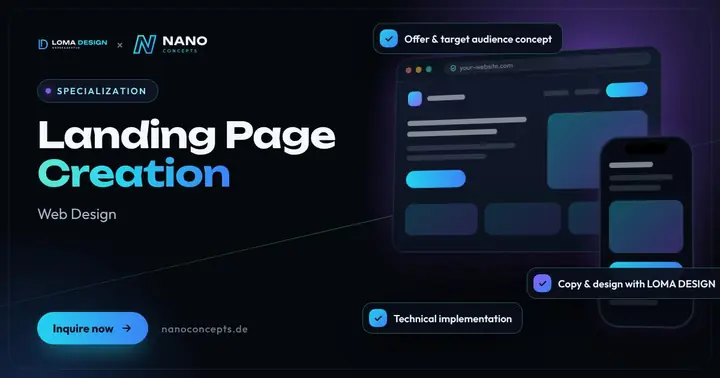
Landing Page Creation
Landing pages for ads and campaigns – one offer, one goal, measurable results. Concept and design with LOMA DESIGN.
Learn more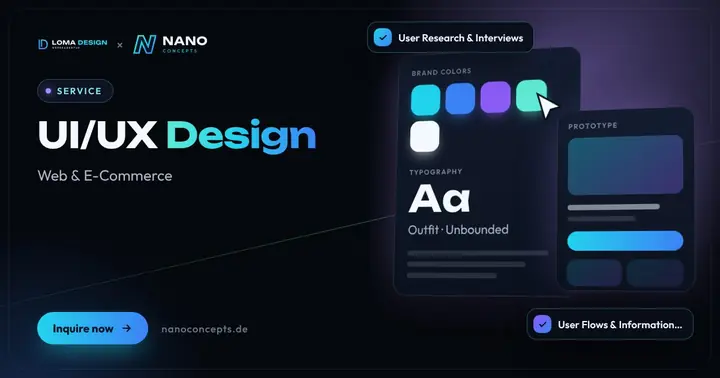
UI/UX Design
Interfaces for software, apps and portals – researched, tested as a prototype and designed with LOMA DESIGN.
Learn more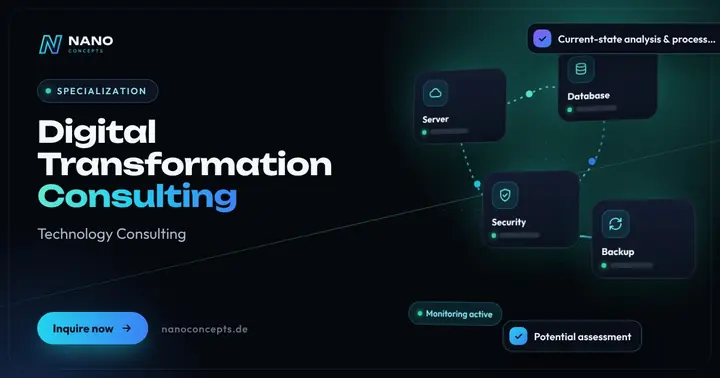
Digital Transformation Consulting
Analyze processes, set priorities, create a roadmap – digital transformation consulting for SMEs with implementation in mind.
Learn moreRelated terms
Relevant for these industries
Related magazine articles
WCAG 2.2 and BITV 2.0 in Practice: Implementing Web Accessibility
How to implement a website to WCAG 2.2 AA: new criteria, clear responsibilities across design, development and editorial, effective testing and a checklist for your relaunch.
Read more
App Development: The Process from Idea to App Store
From the first conversation to publication on the App Store and Google Play: the five phases of app development, with deliverables, decisions, a practical example and the most common pitfalls.
Read more
BFSG Accessibility: Obligations for Websites, Stores and Apps
Germany’s Accessibility Strengthening Act (BFSG) has applied since June 28, 2025. Who is affected, what online stores, booking flows and apps must deliver and how to assess properly whether the law applies to you.
Read more
