
What is a data protection impact assessment (DPIA)?
The data protection impact assessment (DPIA, German: DSFA) is a risk analysis under Art. 35 GDPR that controllers must carry out before data processing that is likely to result in a high risk to the rights and freedoms of individuals. It assesses risks and defines countermeasures.
DPIA: definition and obligation
The DPIA is a structured procedure in which companies check, before processing begins, which risks arise for the individuals concerned and how they can be limited. It is not required for every processing operation, only where a high risk is likely, above all when new technologies are used.
Art. 35(3) GDPR lists examples: systematic and extensive evaluation of personal aspects with significant effects (profiling), large-scale processing of special categories of data such as health data, and systematic large-scale monitoring of publicly accessible areas. The data protection authorities have also published lists of processing operations for which a DPIA is always required.
How a DPIA works
First, a preliminary check (threshold analysis) clarifies whether a DPIA is needed. If so, the company works through the steps that Art. 35(7) GDPR names as minimum content. A designated data protection officer must be involved; the results are documented and updated when the processing changes.
- Systematic description of the planned processing and its purposes
- Assessment of necessity and proportionality
- Assessment of the risks to the rights and freedoms of individuals
- Definition of remedial measures, safeguards and security measures
- Documentation, approval and regular review
Real-world example: GPS tracking in a vehicle fleet
A logistics company wants to equip its delivery vehicles with GPS tracking and analyze when drivers stop and where. This makes sense for route planning, but it also allows the behavior of individual employees to be monitored. The preliminary check shows an elevated risk, so a DPIA is carried out.
The result: tracking only during working hours, no evaluation of individual drivers without cause, short retention periods, access only for dispatch, information for employees and involvement of the works council where one exists. With these measures, the risk falls to an acceptable level and the processing can start.
Consultation, mistakes and limits
If a high residual risk remains despite countermeasures, the controller must consult the supervisory authority before processing begins (Art. 36 GDPR). A missing but required DPIA can be penalized as a separate violation with a fine. It is not a one-off formality: if purposes, technology or data types change, the assessment must be renewed.
- Carrying out the DPIA only after the system has gone live
- Filling in templates without a genuine risk assessment
- Assessing risks from the company’s perspective instead of that of data subjects
- No update after feature extensions or the use of AI
What companies should look out for
Build the preliminary check into every new system involving personal data, especially for AI, video surveillance, tracking or health data. Involve the business unit, IT and data protection early, because the DPIA must be in place before launch. Nano Concepts supplies technical descriptions, data flows and safeguards on which your data protection advisor can base the assessment. This article does not replace legal advice.
Frequently asked questions about Data protection impact assessment (DPIA)
When processing is likely to result in a high risk to the rights and freedoms of individuals. Indications are the examples in Art. 35 GDPR and the lists of the data protection authorities. When in doubt, a documented preliminary check helps.
The company is responsible as controller. It seeks the advice of the data protection officer, if one has been designated, and involves the business unit and IT, who describe purpose, data flows and technology. Service providers must assist where needed.
The record documents all processing activities, that is, what happens with which data. The DPIA, by contrast, assesses the risks and countermeasures for particularly risky processing. The two documents complement each other but do not replace one another.
Not automatically, but often. If personal data is processed on a larger scale or people are evaluated, a high risk may exist. Check this before use with a preliminary assessment and involve the data protection officer.
Matching services

Web Security
Find and fix vulnerabilities – for websites, online stores, customer portals and custom web applications.
Learn more
AI Consulting
Potential analysis, prioritized AI use cases and a realistic roadmap – from a team that also implements AI.
Learn more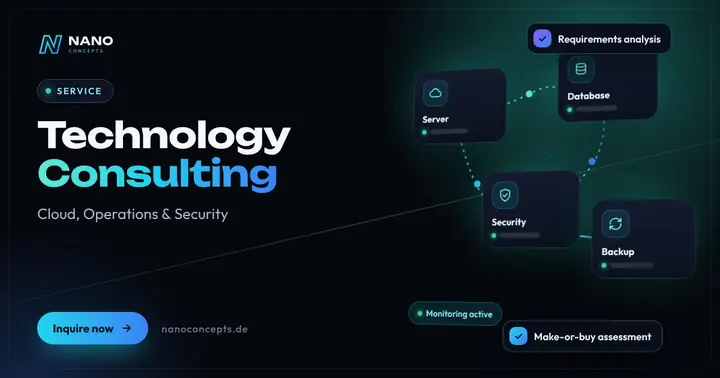
Technology Consulting
Software selection, architecture, code review and a digitalization roadmap – independent and implementation-oriented.
Learn moreRelated terms
Relevant for these industries
Related magazine articles
Software Maintenance: What a Maintenance Contract Should Include
Software is never finished. Which services a maintenance contract should include, how to separate maintenance, support and further development, and what scope your software really needs.
Read more
Securing WordPress: Hardening, Updates, Plugins and Backups
Most WordPress vulnerabilities sit in plugins and themes, not in the core. How to harden your installation with clear permissions, a fixed update routine, tested backups and monitoring.
Read more
Software Requirements Specification (Lastenheft): Structure, Example and Checklist
A good requirements specification makes quotes comparable and fixed prices possible. How it is structured, how to word requirements so they can be tested and how to tell that yours is complete.
Read more
