
What is full-stack development?
Full-stack development means building software across all technical layers—from the user interface (frontend) through the server and business logic (backend) to the database, interfaces, and deployment on the server.
Full-stack development: definition
The “stack” refers to the stack of technologies an application is made of. At the top is the interface in the browser or app, followed by the backend, the database, and the infrastructure everything runs on. Full-stack development looks at this stack as a whole.
A full-stack developer knows all layers well enough to implement a feature from the database all the way to the button. That doesn't mean they go deeper into every specialty than a specialist would—but that they understand how everything fits together.
For clients, the term is relevant mainly because it describes how a project is organized: a full-stack team delivers a working application rather than individual parts that still have to be put together.
What a typical technology stack looks like
Different combinations are used depending on the project. Common acronyms describe such combinations, such as LAMP (Linux, Apache, MySQL, PHP) or MERN (MongoDB, Express, React, Node.js). More important than following a trend is that the stack fits the requirements and long-term maintenance.
The stack also includes everything around it: version control with Git, automated tests, backups, and monitoring. Only then does code become an application that runs reliably day to day.
- Frontend: HTML, CSS, JavaScript/TypeScript, React or Vue
- Backend: PHP with Laravel, Node.js, or Python
- Database: MySQL, PostgreSQL, or MongoDB
- Interfaces: REST APIs or GraphQL
- Operations: Linux servers, Docker, cloud hosting, CI/CD
Benefits and limitations of the full-stack approach
Keeping an eye on all layers leads to better architecture decisions: a feature is implemented where it belongs, and the friction of coordinating between separate teams disappears. Especially for smaller projects and MVPs, this quickly leads to a working result.
On very large or highly specialized projects, a single person reaches their limits. In those cases, full-stack developers work in a team with experts in design, security, databases, or DevOps.
- Fewer handoffs between teams, faster implementation
- End-to-end understanding from data to interface
- Well suited for MVPs and mid-sized applications
- Bring in additional specialists for specialized topics
Real-world example: a booking platform from a single source
A service provider wants to offer online appointment booking that is connected to its calendar and invoicing. A full-stack team designs the data model, backend, and booking interface together, connects the calendar via API, and sets up automated deployment. Later changes—such as a new field in the booking form—are implemented in one go, from the database to the interface.
For businesses, this means one point of contact for all the technology instead of several service providers. Nano Concepts develops web applications full-stack in this way and, when needed, brings in the design expertise of its partner agency LOMA DESIGN.
Frequently asked questions about Full-stack development
They develop both the visible interface and the server logic and database of an application, and they take care of interfaces and deployment.
Not across the board. Full-stack development plays to its strengths in overview and speed; for very deep specialist topics, specialists complement the team.
Especially for web applications, customer portals, internal tools, and MVPs in which frontend, backend, and database work closely together. The big-picture view also helps when modernizing existing applications.
Matching services
Web Applications
Customer portals, dashboards and SaaS platforms that run in the browser – no installation, on any device.
Learn more
Software Development
Software from requirements to operations – web, mobile and integrations from a single source.
Learn more
React Development
Frontends with React, Next.js and TypeScript – for web apps, dashboards and portals that stay fast and maintainable.
Learn moreRelated terms
Relevant for these industries
Related magazine articles
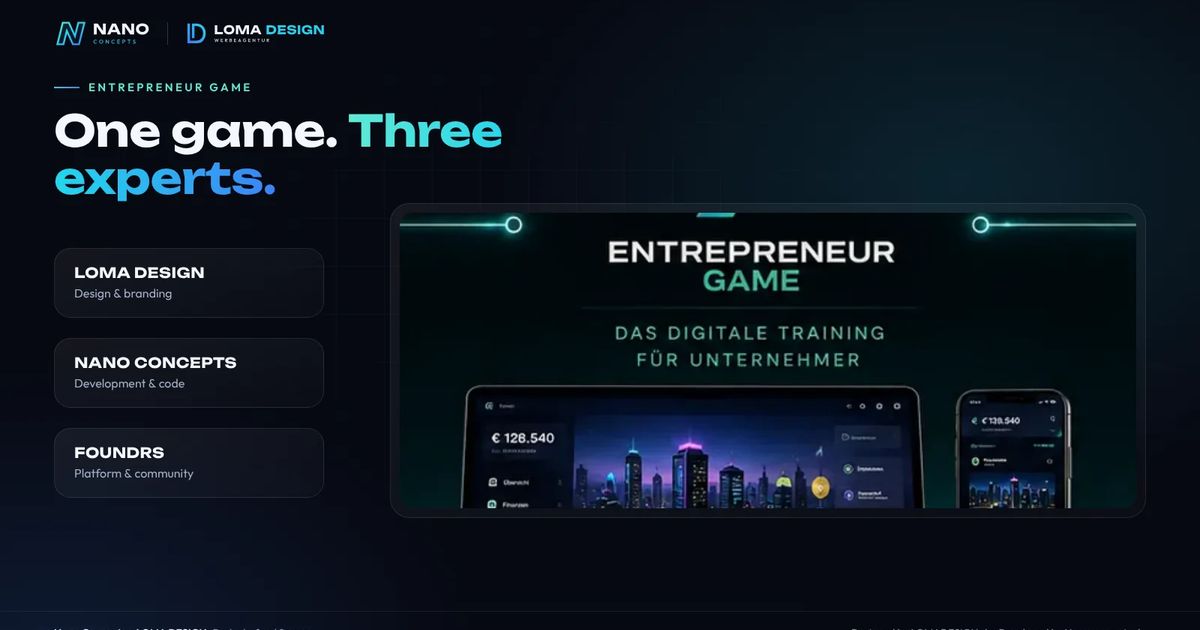
Entrepreneur Game: A Business Simulation for Founders and Entrepreneurs
Invest, hire, market – without real risk: the Entrepreneur Game is a realistic simulation game for founders and entrepreneurs in the making. A project by three partners – and a look at what you can learn from it for your own gamification projects.
Read more
REST API with OpenAPI: Design, Versioning and Error Format
A good API is understandable, stable and well documented. How to design REST APIs with OpenAPI cleanly, version them without breakage and save integration effort with a clear error culture.
Read more
Web Analytics and KPIs: From Measurement Plan to Decision
Most companies have more data than they use. With clear goals, a documented measurement plan, clean consent and dashboards, clicks become traceable decisions all the way to revenue.
Read more
