
What does internationalization (i18n) mean?
Internationalization (i18n) is the technical preparation of software or a website so that it can be adapted to different languages, countries, and cultures without rebuilding it. The actual adaptation to a market is called localization (l10n).
i18n: definition and abbreviation
The abbreviation i18n stands for “internationalization”: there are 18 letters between the first “i” and the last “n.” It refers to the technical preparation. Texts, date formats, currencies, and sorting rules are not hard-wired into the code but loaded depending on language and region (locale).
Localization (l10n) builds on this. It translates the content and adapts it to a market, for example forms of address, images, units of measurement, or legal texts. Anyone who implements i18n cleanly first can add further languages later with manageable effort, without touching the application itself.
What to consider in internationalization
An internationalized application consistently separates content from technology. There are proven standards and libraries for this, such as the Intl API in JavaScript, the ICU libraries, and the regional data of the Unicode CLDR. They provide correct formats and sorting for many regions. Typical building blocks:
- Texts in language files instead of source code, with room for longer translations
- UTF-8 character encoding for umlauts, accents, and other scripts
- Formats for date, time, numbers, and currency per region
- Plural rules and grammar that differ by language
- Right-to-left layouts for Arabic or Hebrew
- Language switching and separate URLs per language
Real-world example: software for heating contractors
A provider of maintenance software for heating contractors wants to offer its app in Austria and Switzerland as well. In Austria, individual terms differ, for example “Jänner” instead of “Januar”; in Switzerland the Swiss franc applies and “ss” is written instead of “ß,” and number and date formats also differ in detail.
Because the app was internationalized from the start, new language files and regional settings are enough. Without i18n, the code would have to be adjusted in many places, and every new market would become its own development project with its own testing and maintenance effort, recurring with every program change.
Benefits, limits, and common mistakes
Internationalization lowers the cost of every additional language and avoids errors. It does not replace a good translation, though, and not every project needs it. Retrofitting is considerably more work than clean planning at the start of a project, because texts and formats are then scattered throughout the code.
- Sentences assembled from text blocks that break word order in other languages
- Fixed widths for buttons although translations get longer
- Images with embedded text
- Assuming every name consists of a first and last name
- Date and number formats hard-wired in the code
Internationalization for websites
For websites, the search engine side is added: separate URLs per language, hreflang references, translated metadata, and a language selector that does not redirect visitors against their will. Nano Concepts plans multilingual websites and applications from the start so that further languages can be added without a rebuild.
Frequently asked questions about Internationalization (i18n)
i18n is the technical preparation that allows an application to support multiple languages and regions. l10n is the concrete adaptation to a market, meaning translation, formats, and cultural specifics. i18n comes first, then l10n.
The abbreviation counts the 18 letters between the “i” and the “n” of “internationalization.” By the same principle, l10n stands for “localization” and a11y for “accessibility.” Such shorthand is common in software development.
As soon as it is foreseeable that an application or website will be used in more than one language or region, for example through exports, international customers, or employees. If you plan only German at first, you should at least separate texts and formats cleanly from the code.
Not quite. The multilingual website is the result; internationalization is the technical foundation for it. For websites, search engine aspects such as hreflang and separate addresses per language come on top, going beyond pure technology.
Matching services
Multilingual Website
Separate URLs per language, hreflang, translated forms and local search terms – so international customers can find and understand you.
Learn more
Web Applications
Customer portals, dashboards and SaaS platforms that run in the browser – no installation, on any device.
Learn more
Software Development
Software from requirements to operations – web, mobile and integrations from a single source.
Learn moreRelated terms
Relevant for these industries
Related magazine articles
REST API with OpenAPI: Design, Versioning and Error Format
A good API is understandable, stable and well documented. How to design REST APIs with OpenAPI cleanly, version them without breakage and save integration effort with a clear error culture.
Read more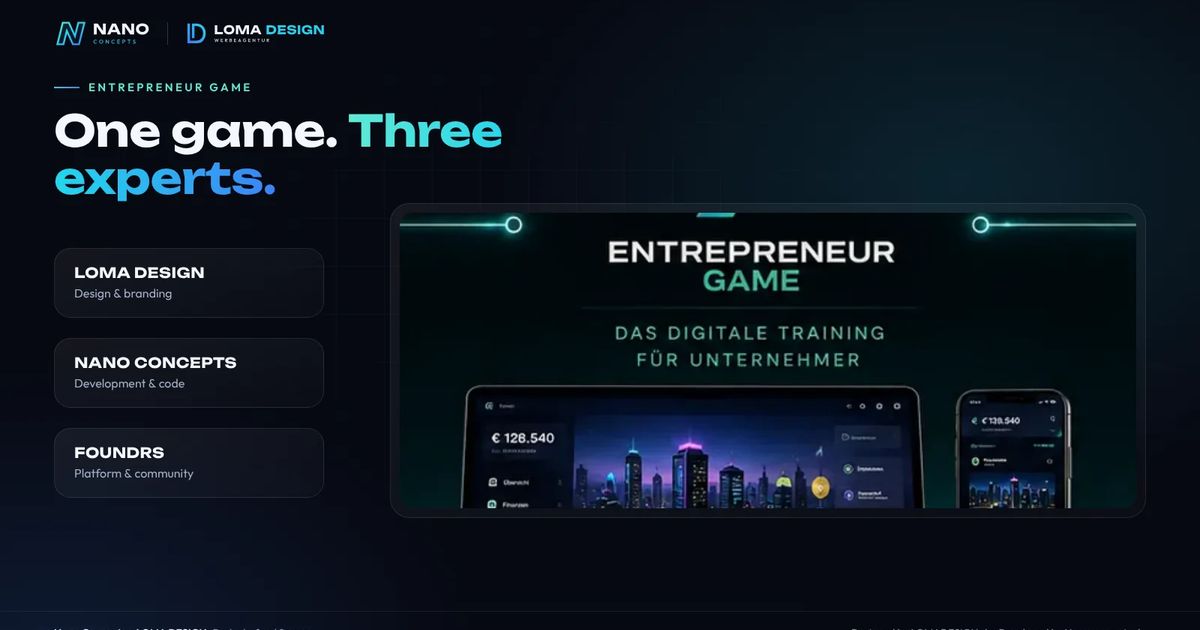
Entrepreneur Game: A Business Simulation for Founders and Entrepreneurs
Invest, hire, market – without real risk: the Entrepreneur Game is a realistic simulation game for founders and entrepreneurs in the making. A project by three partners – and a look at what you can learn from it for your own gamification projects.
Read more
Scrum in Software Projects: Roles, Process and Velocity
Scrum makes progress visible – when the Product Owner can make decisions, the Definition of Done applies and velocity serves as an internal planning tool. A guide for clients commissioning custom software.
Read more
